Can AI Replace Human Creativity?
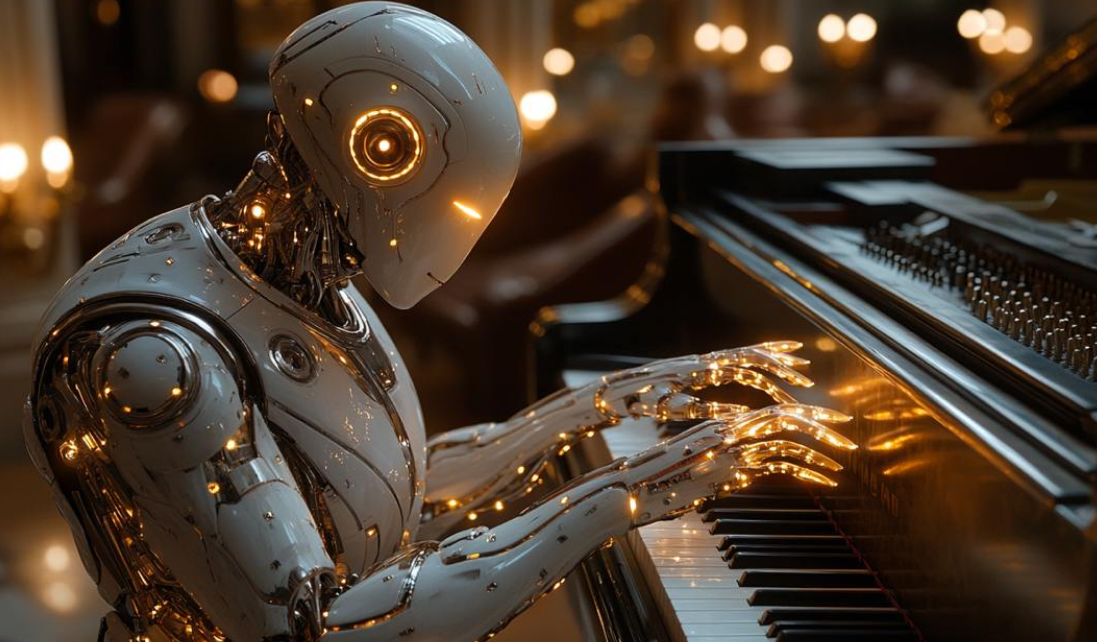
The question of whether AI can replace human creativity has garnered considerable attention. While AI technology has advanced in generating art, music, and literature, its outputs often lack the emotional depth and cultural context inherent in human expression. This raises critical inquiries about the role of AI in creative processes. Can it truly replicate the nuances of human creativity, or is it merely a tool that enhances artistic endeavors? The implications of this distinction warrant further exploration.
The Evolution of AI in Creative Fields
As advancements in technology have accelerated, the evolution of artificial intelligence (AI) in creative fields has become increasingly pronounced.
Creative algorithms are now capable of generating art, music, and literature, showcasing remarkable AI advancements. This digital innovation fosters artistic collaboration, enabling creators to explore new dimensions while challenging traditional notions of creativity.
The interplay between human intuition and machine intelligence redefines the landscape of artistic expression.
See also: Blockchain Beyond Crypto: Real-World Applications
Enhancing Creativity: AI as a Collaborative Tool
While the debate surrounding AI’s role in creativity often centers on competition, it is essential to recognize its potential as a collaborative tool that enhances human artistic endeavors.
AI collaboration fosters creative synergy by integrating innovative tools that inspire new ideas and approaches.
Through tool integration, artists can unlock unexplored dimensions, ultimately leading to significant innovation enhancement in various creative fields.
The Limitations of AI in Artistic Expression
Despite the promising collaboration between AI and human artists, significant limitations hinder AI’s ability to fully replicate the depth of human artistic expression.
Algorithmic constraints restrict AI’s capacity to understand and convey emotional depth, often resulting in works that lack the nuanced subtleties found in human-created art.
Consequently, while AI can generate impressive pieces, it remains unable to capture the profound essence of true creativity.
The Unique Aspects of Human Creativity
Human creativity is characterized by a remarkable interplay of emotion, experience, and intuition that transcends mere technical skill.
This unique expression often reflects emotional depth and is deeply rooted in cultural context, allowing individuals to convey complex narratives and sentiments.
Unlike algorithms, human creators draw from personal histories and societal influences, enriching their work with authenticity and profound meaning that resonates on multiple levels.
Conclusion
In conclusion, while AI has transformed the landscape of creative fields, it cannot supplant the depth of human creativity rooted in emotion and experience. For instance, the collaboration between artist Refik Anadol and AI has resulted in mesmerizing digital installations that blend human vision with algorithmic innovation, showcasing a partnership rather than a replacement. This synergy highlights the potential for AI to augment artistic expression, fostering a new era of creativity that embraces both human and machine contributions.